.svg)

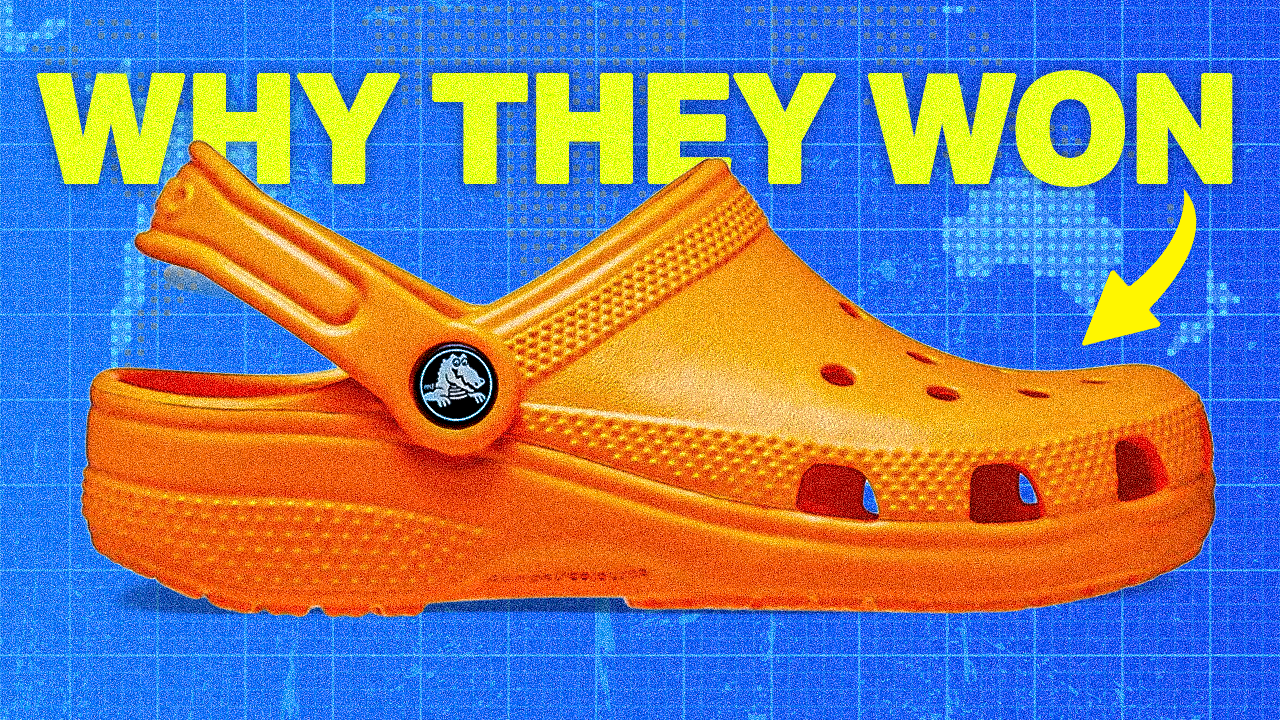
At their lowest point, Crocs was closing stores, hemorrhaging money, and the entire internet agreed on one thing. These shoes were ugly and they needed to go.
But here's the part most people don't know.
The decision that saved Crocs was not changing the product. It was fully embracing the very reason people made fun of it. That single choice turned a Crocs comeback into one of the most studied brand turnarounds in footwear history.
I'm Owen Osinde, and this is The Underrated. We share stories that showcase game-changing strategies and moments that shape business, music, sports, and culture as we know it today.
Crocs started as a simple foam clog in the early 2000s, built around comfort, simplicity, and a design that looked completely different from anything else on the market. For a moment, that difference worked. By 2006, Crocs had gone public, expanded globally, and become one of the fastest growing footwear brands in the world.
But that momentum didn't last. By 2008, the company was dealing with massive inventory issues, slowing demand, and a stock price that had completely collapsed, turning what was once a breakout success into a cautionary tale.
Over the next decade, things never fully recovered. Stores were closing, losses were piling up, and by 2017, Crocs weren't just struggling. They were facing a serious identity crisis.
That same year, Andrew Rees stepped in as CEO. And instead of trying to reinvent Crocs, he made a much riskier decision. He simplified the business. He shut down underperforming stores and doubled down on the one product most people made fun of: the classic clog.
The problem was never awareness. Everyone already knew Crocs. The real issue was relevance. People just didn't want to wear them.
By that point, Crocs had become a joke. Most brands in this position would have taken the predictable route. They would have redesigned the product, rebranded the image, and tried to position themselves as something cooler.
But Crocs decided to do the opposite and leaned into it. Instead of fixing the fact that people thought they were ugly, they embraced it. They noticed a shift was happening in culture. For decades, fashion had always been about how things looked. Crocs took a different approach and bet on something else. They believed people would wear products based on how they felt more than how they looked.
In a world of perfect feeds and overly polished brands, that shift toward comfort and authenticity became impossible to ignore. So instead of trying to be cool, Crocs focused on being real.
What made this even more powerful was not just the product, but how people interacted with it. Early on, Crocs had acquired a small accessory brand called Jibbitz, which let people customize their shoes with small charms and designs. It seemed like a minor feature. But it ended up being one of the most important parts of the business. It turned Crocs from a product into a platform for self expression. Jibbitz didn't just let people customize their shoes. It let them signal who they were. Every pair became unique and impossible to replicate.
What made this comeback different was how it happened. Crocs never forced their way back into the culture. They just kept saying yes to wherever the culture was already going. And the culture kept rewarding them for it.
When healthcare workers started asking for Crocs during the pandemic, the company responded by donating thousands of pairs. They didn't turn it into a campaign or a PR moment. They just showed up. And people noticed.
Then in October 2017, people started including Crocs in conversations online while celebrating National Crocodile Day. Most brands would have ignored it or tried to capitalize on it in the most corporate way possible. Crocs did something different. They turned October into Croctober, a full month of content, promotions, and community driven engagement built entirely around something their audience created.
That same instinct led to one of their most viral moments: the ThousandDollarCrocs challenge. Instead of telling people what Crocs should look like, they asked a simple question. What would a thousand dollar pair of Crocs look like? People started creating, posting, and sharing their ideas across social media, and within a week Crocs gained over one hundred thousand new followers.
They understood something most brands still miss. People don't want to be marketed to. They want to be part of something bigger than themselves. Crocs didn't just build an audience. They gave their audience something to build.
That energy started attracting people who genuinely loved what the brand stood for. When Post Malone started wearing Crocs, it wasn't a manufactured moment. He was already a fan. When they partnered together, the shoes sold out almost instantly and crashed their website. But more than the sales, it changed how people perceived the brand. It gave people permission. If someone like Post Malone could wear Crocs proudly, so could everyone else.
They kept that momentum going with collabs with Barbie, Cars, and KFC. And then came the move nobody saw coming. Balenciaga put Crocs on the runway.
What was once considered one of the ugliest shoes in the world had now entered luxury fashion. Not because Crocs chased it. But because the culture eventually came to them.
While most footwear brands were trying to look like Nike and follow traditional sneaker culture, Crocs built something completely different: a brand people could play with.
By 2022, Crocs generated 3.6 billion dollars in revenue, growing more than 50 percent in a single year, expanding to 80 countries and becoming one of the most profitable footwear businesses in the world.
And none of that happened because they changed the shoe. It happened because they changed what the shoe meant. Most brands in a crisis look at the product and ask what needs to be fixed. Crocs looked at the culture and asked what people actually value. And at a time when everything felt overly polished and performative, comfort and authenticity were winning.
That's the real lesson here. The brands that last aren't always the ones with the best product. They're the ones that understand what their product means to people, and have the courage to lean into it even when the world is laughing at them.
Crocs didn't survive by becoming something new. They survived by becoming more of what they already were.
If you enjoyed this, make sure to follow along. We share stories like this every week.


%20(1).jpeg)


.png)
.png)

.png)