.svg)

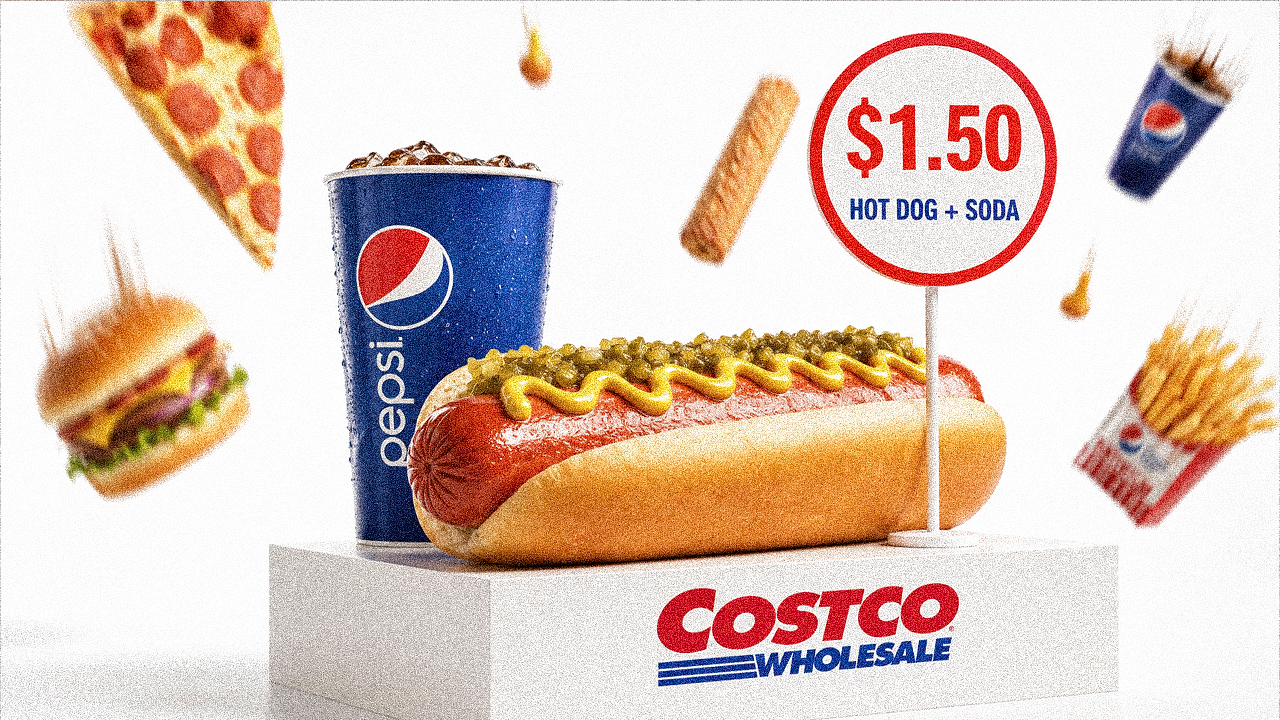
$1.50. That's what a hot dog and soda costs at Costco, the same price they've had since 1985.
But when one of their own executives tried to raise the Costco hot dog price, the company's co-founder didn't want any part of that conversation, and it wasn't even up for consideration.
He literally told him if he touched that price, he'd kill him.
That one sentence turned into an unbreakable rule inside the company, and it's the reason the price still hasn't moved, 40 years later.
I'm Owen Osinde, and this is The Underrated. We share stories that showcase game-changing strategies and moments that shape business, music, sports, and culture as we know it today.
Costco runs almost 900 warehouses worldwide, pulls over $260 billion a year, and has more than 140 million people with a membership card to have the right to walk through the door.
In the middle of all that, they have a hot dog combo people are obsessed with. It's been a staple for decades.
If you've had it, you know it's delicious, reliable, and most importantly the price never moves no matter what's going on in the economy.
To understand the birth of the hot dog combo, we have to take it back to the mid 80s.
Back then Costco was buying hot dogs from kosher brands, with Hebrew National being the biggest one.
One day they decided that they were going to experiment with a single hot dog cart outside one of their warehouses in San Diego.
The stand instantly became a big hit with their customers. It worked so well that they decided to make it a permanent menu item in their food court for $1.50.
When they launched it, the original price just stuck. Even as the cost of buns and beef kept climbing, they never budged on the price.
But as years went by, the math on the hot dog combo stopped making sense. One of their top executives, Craig Jelinek, went to Jim Sinegal, who was the CEO, and told him that they were losing money on the hot dog and needed to raise the price.
Sinegal's answer to him became legend within the company. He told him, if you raise the price of the hot dog, I'm gonna have to kill you.
He told him to just figure it out. There wasn't gonna be some meeting, no committee vote, just a flat no dressed up as a dare.
So instead of eating the loss, Costco decided to go upstream.
In 2009, they walked away from the kosher hot dog market. They opened up their own meat processing plant in Tracy, California just to build the hot dog from scratch under their own Kirkland brand.
This wasn't the same hot dog with a new label on it. It was a completely different hot dog, and way bigger than the original.
It's made from USDA Choice beef, no fillers or corn syrup, and not kosher anymore.
When demand outgrew that one plant, Costco opened a second one in Morris, Illinois, just to keep up.
They even switched the soda from a 12 ounce can to a 20 ounce fountain drink, which is bigger for the customer but actually cheaper for Costco to serve.
Here's why this mattered so much. Industry estimates put the traditional raw cost of a hot dog, bun, and condiments from outside suppliers somewhere between 45 and 80 cents, and a cup of soda costs another 10 to 20 cents to pour.
When you add all that up, if Costco decided to keep things as is, the actual cost on the whole combo could be way above a dollar.
Which means owning the plant didn't just shave off a few cents here and there. It allowed them to operate at a way larger margin.
This took a straight up loss and turned it into something Costco could plausibly break even on, without ever touching the price tag.
By 2019, their food courts alone were moving over 130 million combos a year.
The fix was never a new price tag. It was owning the cost so the price tag never had to change.
The hot dog combo isn't some weird one off exception that Costco did for nostalgia's sake.
The whole company runs on a rule like this. They cap markups at 14% on pretty much everything in the warehouse.
Even their wine. Wine is typically marked up 200 to 300% industry wide. Sinegal was so adamant about this that he's famous for telling a story about a shipment of Calvin Klein jeans they priced at $29.99.
A couple weeks later, Calvin Klein sent in a cheaper shipment. Typically in this case, most retailers would have pocketed the difference.
Costco automatically dropped the price to $22.99 instead. Sinegal compared holding that kind of extra margin to taking heroin.
He said once you start, you can't stop.
The hot dog isn't the exception. It's just the most visible proof of a rule that runs through the entire store.
Costco built its whole identity around doing the opposite loudly, and on purpose, where anyone can walk in and check for themselves.
And selling hot dogs isn't cheap to maintain either. Costco sells more than 100 million combos a year. If that price had adjusted for inflation since 1985, it would be closer to $4.50.
Membership fees alone bring close to $5 billion a year at 70% margins before Costco sells you a single item.
The renewal rate for their cards has sat above 90% worldwide and above 92% in the US and Canada for over a decade now.
This was never about a hot dog. It was about the price of trust. Every year that $1.50 holds, it's quietly backing up the one promise the entire membership model depends on.
Over the years, rumours have circulated that the price might change. Costco has always come out in front of it, whether it's in the press, in earnings calls, or to their team, and shut down the idea confirming the price is safe.
The hot dog was never the product. The real product is the certainty that the deal you signed up for is still the deal you're getting, years later, without ever having to check.

%20(1).jpeg)
.png)
.png)
.png)