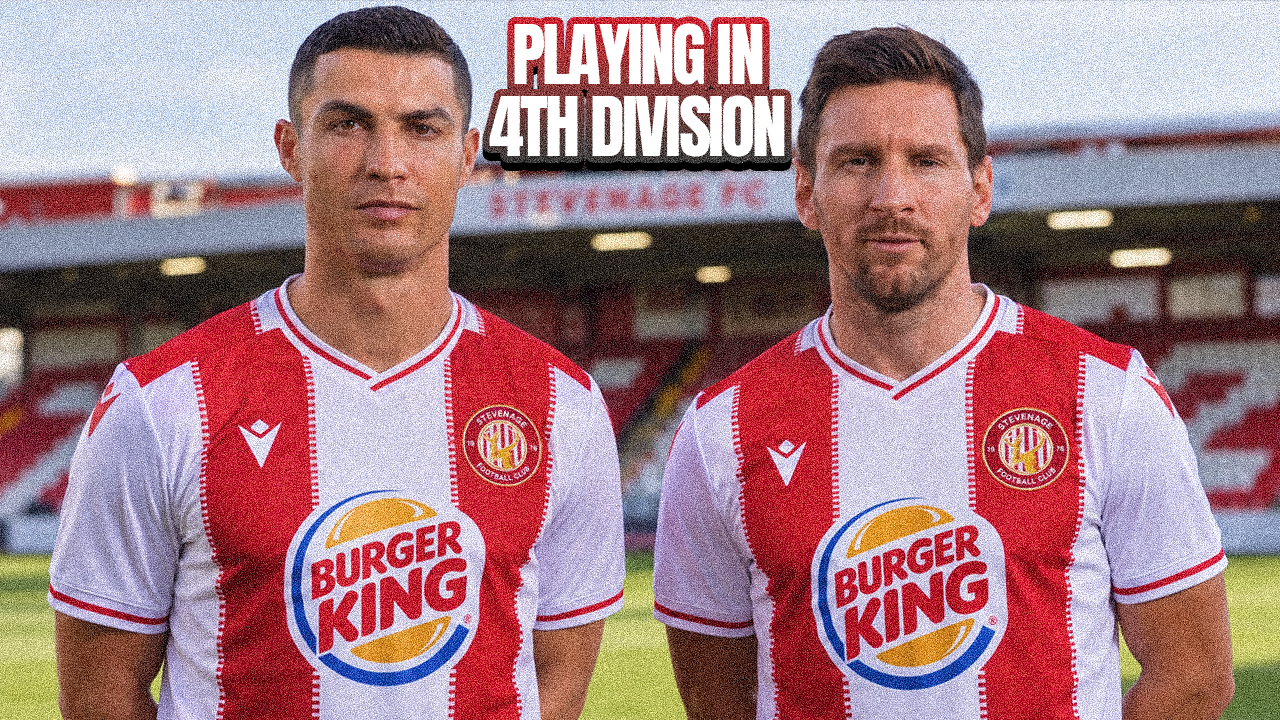
Burger King wanted its logo on the biggest names in football without paying for their endorsements. In 2019, it found a way to do it by sponsoring a club most people outside England had never heard of: Stevenage, a team in the country’s fourth division.
The club was a surprising choice for a global brand. It did not have the audience of Arsenal or Manchester United. But Burger King and its advertising agency, DAVID, saw an opportunity beyond the stadium.
Stevenage was in the FIFA video game. That meant the game used the club’s real kit, including its sponsor logo. If gamers chose Stevenage, they could put Burger King’s logo on screen alongside some of the world’s most famous players.
A small club with a worldwide audience
Football shirts are valuable advertising space. A sponsor’s logo appears on the front of the kit during matches, and it stays there when fans buy and wear the shirt.
Stevenage could offer that kind of exposure at a much smaller scale than a top club. But its place in FIFA gave the sponsorship another life. Gamers anywhere in the world could choose the team, then build a fantasy squad with players such as Cristiano Ronaldo, Lionel Messi, or Kylian Mbappé.
Those players had not signed endorsement deals with Burger King. But in the game, someone could put them in a Stevenage shirt with the Burger King logo on the front.
Burger King contacted Stevenage in April 2019 and spoke with the club’s chief executive, Alex Turnbridge. The club presented its case for the partnership and made clear that it was open to trying something different. By June, the deal was official.
Then came the timing question: would the new shirt appear in FIFA 20?
When the game launched in September, a creative lead at DAVID rushed out to buy a copy and check. If the game still showed Stevenage’s old kit, the central idea would be in trouble. The logo was there.
EA said FIFA 20 had attracted more than 10 million players by October 10. That number showed the game’s potential reach, but it did not guarantee anyone would choose Stevenage. Players had plenty of bigger clubs to pick from. Burger King needed to give them a reason to play as the underdog.
Turning the shirt into a challenge
The answer was the Stevenage Challenge. Players could wear the sponsored kit, complete an in game task, and share footage of their gameplay to earn food rewards.
Some challenges asked players to score a goal or score from a corner. One was called “Nutmeg for Nuggets.” A nutmeg is when a player sends the ball between an opponent’s legs. In the game, pulling one off could earn you chicken nuggets.
The offer was easy to understand. If you were already playing FIFA, you could try a challenge and get something to eat in return. Depending on where you lived, you could redeem the reward through the Burger King app, at a restaurant, or through a delivery service.
But the requirement to share gameplay was just as important as the food. A logo on a screen might only reach the person playing and anyone watching beside them. When players posted their clips online, the logo travelled with the video.
A gamer could score a goal, claim a reward, and show off a team featuring Ronaldo or Messi in Stevenage colours. Burger King’s logo was part of the moment they wanted other people to see.
What the campaign delivered
According to the agency behind the campaign, players scored more than 25,000 goals as Stevenage during the challenge, which ran for just over two weeks.
A campaign case study published by WARC reported more than 150 media placements and 227 million media impacts. Media impacts count exposure and can include the same person more than once, so the figure does not mean that 227 million different people saw the campaign. It does show how far a small club’s shirt travelled beyond its usual audience.
Stevenage saw a result at home too. The club reported that merchandise sales increased by 300%, and it sold out of its home shirt for the first time in its history. The campaign brought new attention to the team and prompted interest from other potential sponsors.
In 2020, the idea continued with the women’s team. Burger King appeared on the shirt as “Burger Queen,” and the campaign produced similar results.
The real Stevenage squad did not need to become world famous for its shirt to travel around the world. The club’s place in FIFA gave Burger King a way in. The food rewards gave players a reason to use the kit, and sharing their gameplay carried the logo beyond the game.
Gamers helped put the shirt in front of an international audience. Some of them then chose to buy one for themselves