.svg)

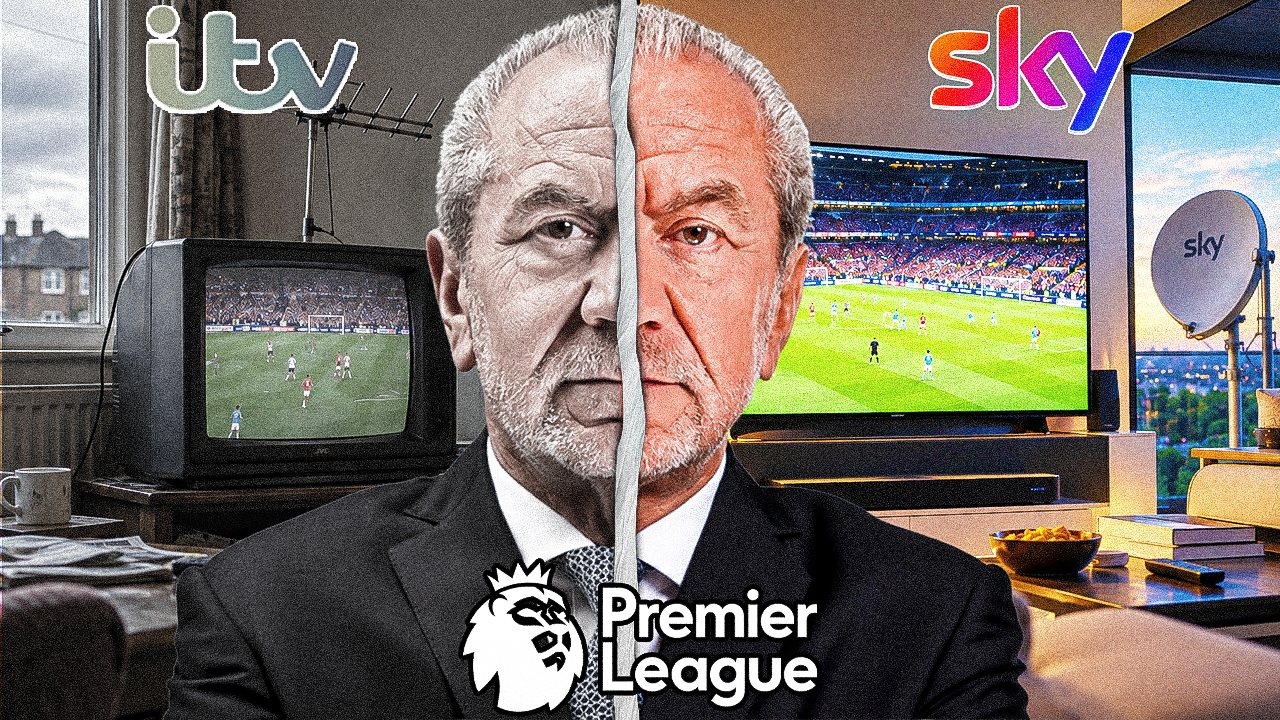
In 1992, England's top football clubs had just broken away to form the Premier League. ITV and Sky were the two companies competing for the broadcasting rights. Hundreds of millions of pounds were on the table, and the 22 clubs had to vote on the 1992 Premier League TV deal that would decide how the country watched football. Keep live games free with ITV, or make fans pay for Sky.
One of the men in that room owned a company that supplied Sky with satellite equipment. If Sky won, more subscribers could mean more business for him. He had a clear financial interest in who won.
The room knew about that relationship. They let him vote anyway.
In 2025, the Premier League signed a new domestic broadcasting deal worth 6.7 billion pounds that runs until 2029. Football is a money making machine for TV networks now. But it wasn't always like this, and the whole structure traces back to one afternoon in a London hotel.
The top flight clubs had come to an agreement to break away from the Football League. But to do it properly, they needed a strong broadcasting partner.
At the time, all 92 clubs in England's top four divisions belonged to the Football League. The TV money was shared across every division, with the top flight taking the biggest portion. And as time went on, the bigger clubs grew frustrated. They were the main TV draw, they were filling the stadiums, and they wanted more control over the money their matches were bringing in.
So in 1990, Greg Dyke, who ran London Weekend Television, met with representatives from Arsenal, Everton, Liverpool, Manchester United and Tottenham. Across football, those teams were known as the Big Five. Dyke wanted to know whether they would support a breakaway that ITV could broadcast.
On paper the partnership made sense. Dyke wanted the clubs he believed people would tune in to watch, and those five clubs wanted to sell their TV rights separately from the rest of the Football League to make more money.
But this was never going to be a league with five teams in it. In February 1992, all 22 clubs in the First Division resigned from the Football League. The other 70 teams stayed in the three divisions below, and clubs could still climb into the new Premier League through promotion or fall back through relegation.
So with another 17 clubs involved, the Big Five couldn't make the decision on their own. And ITV's focus on the biggest names wasn't necessarily what worked best for everybody else.
By May of that year it had come down to two bids. ITV was bidding alone. Sky had teamed up with the BBC, with Sky showing the live matches and the BBC taking highlights for Match of the Day.
The man who helped get the new league off the ground ran an ITV company. But Sky needed something people would pay to watch. Sky's business depended on getting satellite dishes onto houses and subscriptions attached to them, and it saw football as the way to get that done.
So on May 18th, the club representatives gathered at the Royal Lancaster Hotel in London. Rick Parry, the Premier League's chief executive, was overseeing the meeting. And Tottenham's Alan Sugar was there to cast the club's vote.
According to ITV executive Trevor East, as the clubs were about to begin voting, Sugar found out the size of ITV's offer and called Sam Chisholm at Sky, urging him to raise the bid. East said he heard Sugar tell Chisholm to "blow them out of the water."
Now, Sugar had another business outside of Tottenham Hotspur. He had a company called Amstrad, and Amstrad supplied satellite equipment to Sky.
So Sugar had two reasons to care about who won. A bigger TV deal could help Tottenham, and more people signing up for Sky could mean more business for Amstrad. The company trying to win the broadcasting deal was also a customer of the man helping to decide who got it.
And that relationship wasn't a secret in the room. Sugar disclosed it before voting, and the only person who objected to him casting a vote was Arsenal's David Dein. The objection was overruled, and Sugar voted.
It was a clear conflict of interest. But other clubs had their own reasons to want Sky. Sky's offer included 60 live matches a season compared to around 30 in ITV's proposal. If you were a club outside the biggest names, that gave you a far better chance of actually being on television.
And under the new league's system, half the domestic TV money would be shared equally. The rest depended on where you finished and how often you appeared on TV. So you didn't have to be Manchester United to benefit from a bigger deal.
When the votes were counted, Arsenal, Everton, Liverpool and Manchester United backed ITV. Aston Villa and Leeds United joined them, making six. Tottenham went with Sky, along with 13 clubs outside the Big Five, while two clubs abstained.
That made it 14 to 6. It sounds like a comfortable win, but the deal needed a two thirds majority among the clubs voting. 14 out of 20 was enough. If Tottenham had gone with ITV instead, it would have been 13 to seven, and Sky would have fallen short.
The winning package with Sky and the BBC was valued at 304 million pounds over five years. Sky got the live football it wanted, and league highlights returned to Match of the Day.
From then on, Sky began changing what watching football looked like. There was Super Sunday, there was Monday Night Football, and a Sunday broadcast that ran for five hours. One match could become an entire afternoon of television.
If you followed a club, there was always another game coming, another result that mattered, another season to look forward to. And that gave Sky a reason to keep people paying beyond any single match.
By the next deal in 1997, Sky agreed to pay 670 million pounds over four years for the live rights alone, with the BBC paying separately for highlights.
Over time that money changed what the clubs could do. They had more to spend on players, wages and facilities, and the league became a destination for talent from around the world. It became one big ecosystem. The TV money helped clubs attract players, those players gave more people a reason to watch, and a bigger audience made the matches more valuable to broadcasters and sponsors.
But the cultural impact went beyond what the clubs were earning. You could live anywhere in the world and find a community of people in your city gathered to watch their club. A club could represent one English city and still become part of someone's identity on the other side of the world.
Sky didn't create that passion. English football already had famous clubs, fierce rivalries and supporters abroad. But the television business carried those stories further and gave the clubs more money to keep building on them. The investment from owners, the arrival of international players and managers, all of it helped the Premier League grow into one of the world's leading leagues.
For supporters, there was a cost attached. More coverage also meant paying to watch those matches at home. The game was reaching more places, while access to it had become a product people bought every month.
And fifteen years after that hotel meeting, Sky agreed to buy Amstrad for 125 million pounds. The broadcaster ended up buying the company whose owner had helped it compete for the rights in the first place.
Looking back, it's easy to understand why so many clubs went with Sky. There were more live matches and more money on offer, even with Sugar compromised. What followed was a partnership that changed the business of English football and how the rest of the world experienced it.
But that still leaves the question of Sugar's role. His club could benefit from the deal, his other business could benefit from Sky's growth, and he was allowed to help decide the outcome. He told the room about his relationship with Sky, and they let him vote anyway.
So was declaring it enough, or should that business relationship have kept him out of the decision entirely?
If you enjoyed this, make sure to follow along. We share stories like this every week.

%20(1).jpeg)
.png)
.png)
.png)